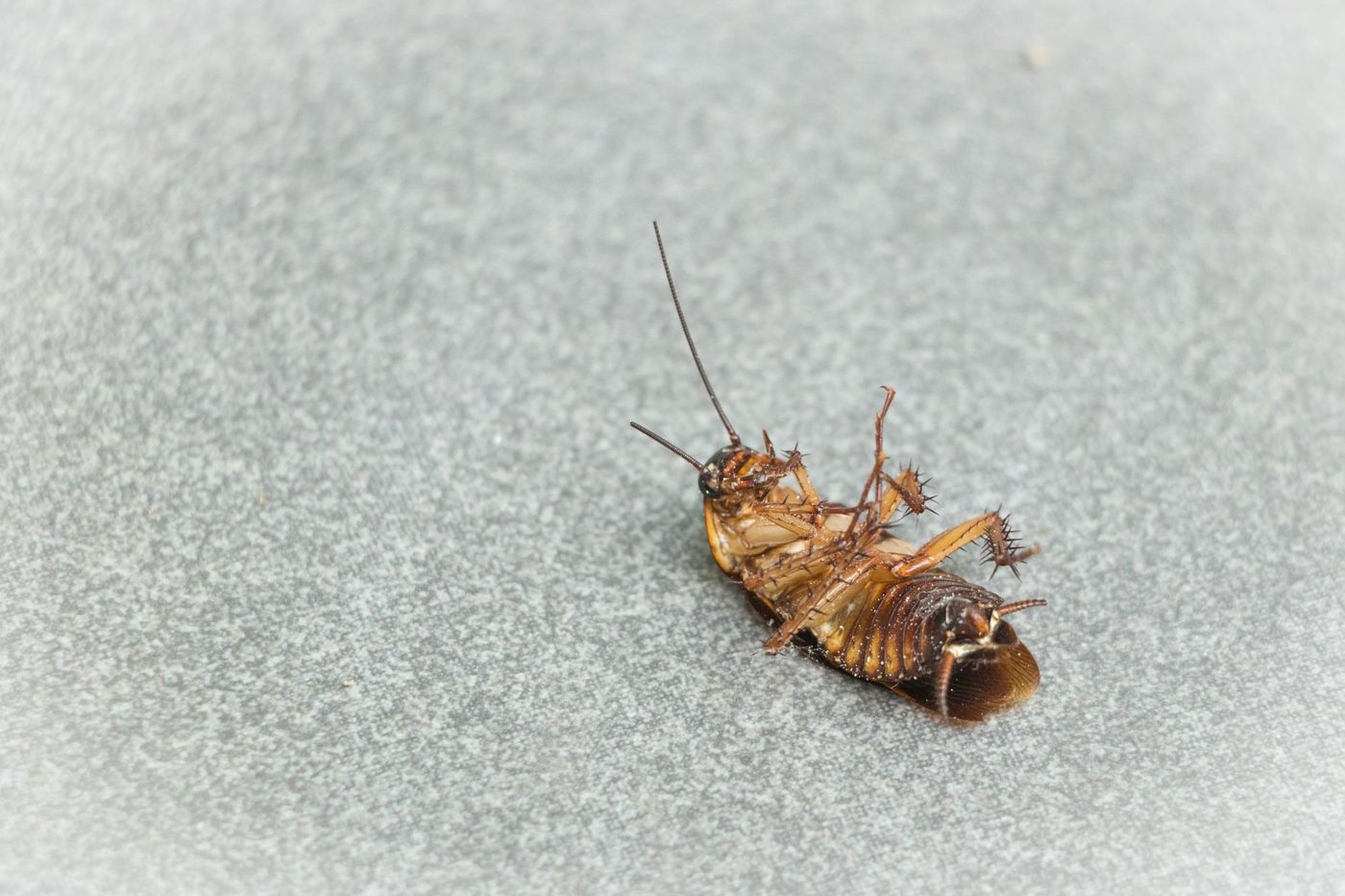
A residential cockroach exterminator in Houston has to deal with more than one roach. In most Houston homes there are two problems at once: German cockroaches breeding indoors around the kitchen and bathrooms, and larger American, smokybrown, and Oriental roaches pushing in from the yard, the storm drains, the mulch beds, and the tree canopy. The humid Gulf climate, the bayous, and the mild winters that never really kill anything off mean roach pressure here runs year round, not just in summer. Call the number on this page and you reach an experienced local exterminator who treats the whole house, inside and out, instead of spraying one baseboard and hoping.
Which roaches show up in a Houston house
German cockroaches are the ones you find in the kitchen at night: small, tan, with two dark stripes. They live indoors, breed fast in warm cracks near food and water, and hide behind the fridge, under the sink, in the dishwasher, and inside the motor housing of small appliances. They rarely come from outside. They arrive on groceries, boxes, secondhand appliances, or through a shared wall, then multiply.
American roaches, the big reddish "palmetto bugs" or "water bugs," and smokybrown roaches are the opposite. They live outside and come in. In Houston they travel up from the sanitary and storm sewers, out of the mulch and leaf litter, and down from attics and soffits where the heavy tree canopy drops limbs onto the roof. Oriental roaches, dark and slow, work the damp spots: drains, crawl spaces, and slab edges. A real fix has to handle both the indoor breeders and the outdoor invaders, because they get in different ways.
How the treatment works
It starts with an inspection. The exterminator identifies which roaches are actually present, because German roaches and smokybrowns call for different work. For German roaches indoors, the reliable approach is gel bait placed in the cracks and voids where they harbor, insect growth regulators (IGRs) that stop the next generation from breeding, and crack-and-crevice treatment around the kitchen and baths, paired with sanitation guidance. Over-the-counter spray actually makes German roaches worse: it scatters them into wall voids and adjacent rooms without touching the population.
For the outdoor roaches, the work moves to the perimeter: treating entry points, weep holes, the foundation line, drains, and harborage in mulch and wood piles, plus the attic and soffits where smokybrowns nest. The pro also flags the conditions feeding the problem, standing water, leaf litter against the slab, tree limbs touching the roof, gaps around pipe penetrations, so the treated house stops being an easy target. Heavy infestations usually take two to three visits over a couple of weeks to break the breeding cycle.
What to expect after the first visit
You may see a short spike in activity in the first day or two as bait and treatment flush roaches out of hiding. That is normal and it means the treatment is reaching them. After that, activity drops. German roach jobs need the follow-up visits to catch the eggs that hatch after the first treatment, so keep the appointments the exterminator sets.
Between visits, the simple things help most: fix drips and slow leaks, keep counters and the sink clear at night, take out food trash, and clear mulch and debris away from the foundation. Roaches need water more than they need food in a Houston kitchen, so cutting the moisture is half the battle.